
Stop the Slouch: A Leader’s Guide to a More Active Workplace

Picture a typical workday: you sit during your commute, spend most of the morning at your desk, sit through meetings, and then sit again on the way home. By 3 pm, your team may be feeling tired and stiff. This is what a sedentary work lifestyle can look like, especially in desk-based roles where emails, meetings, deadlines, and back-to-back calls make sitting the default throughout the day.
For Human Resources (HR) teams, managers, and business owners, the challenge is not simply getting employees to exercise more, it is about proactively supporting employee health. It is about creating a workplace where movement feels normal and easy to fit into the day. Building an active workplace does not mean asking employees to squeeze a full workout into their already busy schedules. It can be as simple as encouraging people to stand up, walk between meetings, take short breaks, or change where and how certain tasks are done. Here are five practical ways leaders can start.
Why an Active Workplace Matters
A workplace where people have opportunities to move throughout the day can make a real difference to the team's energy and focus. Regular physical activity can support memory and thinking skills while helping to manage stress and mental fatigue. When movement becomes part of the workday, employees may find it easier to stay focused instead of hitting that familiar afternoon slump.
On the other hand, spending most of the day sitting can take a toll. The World Health Organization (WHO) highlights insufficient physical activity as an important risk factor for several long-term health concerns and encourages people to replace some sedentary time with movement whenever possible.
The good news is that creating a more active workplace does not mean asking employees to do intense workouts during the workday. Small changes can make a difference. A short walk between tasks, a few minutes of stretching, standing during a phone call, or taking the stairs instead of the lift can all help break up long periods of sitting.
It is these simple, everyday habits that can help create a workplace where movement feels natural rather than like another task employees have to fit into their already busy schedules.
Why “Just Move More” Is Not Enough
Many workplace wellness initiatives start with good intentions by sending a wellness email, putting up a poster, and reminding employees to take more breaks. The problem is that reminders alone rarely change workplace habits. Think about an employee who has back-to-back meetings, a full inbox, and a deadline at 5 pm. Even if they know they should take a 10-minute walk, they may feel that stepping away from their desk means falling behind.
Workplace culture plays a role too, if everyone around them stays seated all day, the person who gets up to walk around may feel like they are doing something unusual. Even taking a proper lunch break can sometimes feel difficult when being constantly available has become the norm. That is why creating an active workplace requires more than telling people to move. Leaders need to make movement feel supported, practical, and completely normal.
Here are five ways to make that happen.
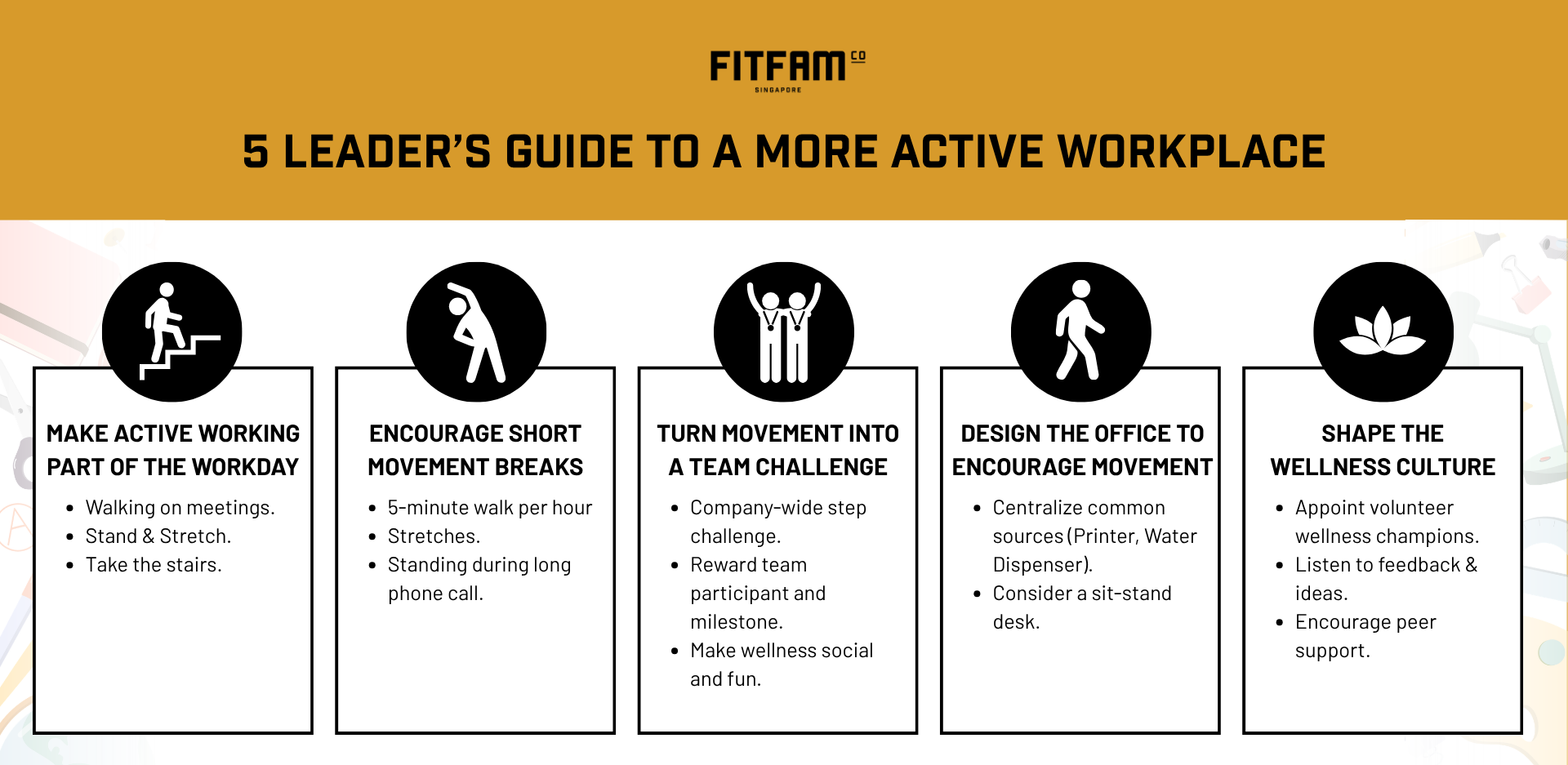
1. Make Active Working Part of the Workday
Movement does not always have to happen outside of work. Start by looking at the way your team already works.
Consider implementing "walking meetings" for one-on-one catch-ups or creative brainstorming sessions. Walking not only breaks up sedentary time, but it also naturally boosts creative thinking and helps teams generate fresh ideas. These small changes can make physical activity at work feel less like another task on the to-do list.
For hybrid and remote teams, the same approach can work from home. During suitable audio-only calls, employees could stand, walk, or stretch instead of staying in their chair. When leaders do this themselves, it sends an important message: being productive does not always mean being glued to your desk. The goal is not to turn every meeting into a walking meeting; it is simply to give employees more opportunities to move without feeling that they are stepping away from work.
2. Encourage Short Movement Breaks
You do not need to schedule a 30-minute exercise class in the middle of every workday. Short, regular movement breaks are often much easier to maintain; that could mean:
Walking over to speak to a colleague instead of sending a message
Standing during part of a long phone call
Taking the stairs
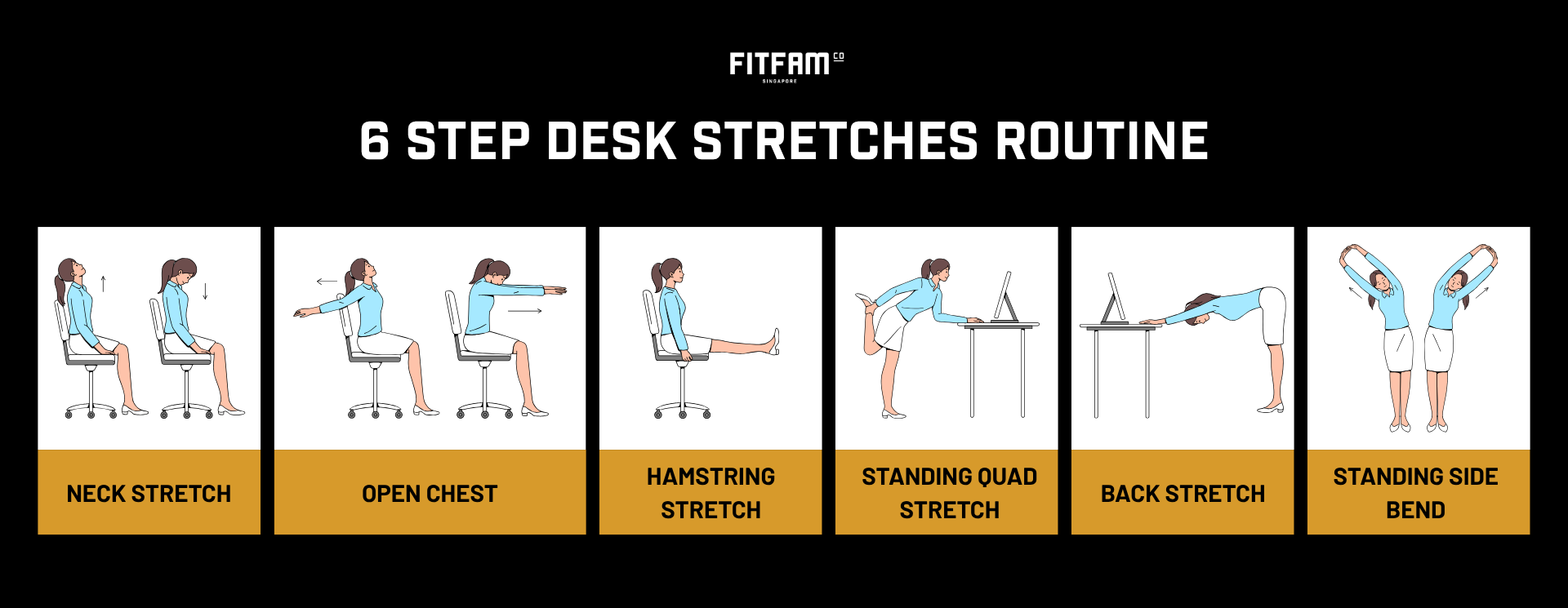
Doing a few gentle stretches between meetings
Taking a quick walk before starting the next task
The key is consistency, not intensity.
Movement reminders can also be built into the tools your team already uses, such as Slack or Microsoft Teams. These can help employees avoid staying in the same position for hours without realising it.
Most importantly, leaders should lead by example. When managers take a short walk, stretch between meetings, or step away from their desks, it shows the rest of the team that taking a movement break is completely okay. Small changes like these can go a long way towards creating an active workplace where moving throughout the day feels normal.
Disclaimer: The information in this article is for general wellness purposes only and should not be considered medical advice. Individual results may vary. If you have specific health concerns or conditions, please consult a healthcare professional before making dietary changes.
3. Turn Movement Into a Team Challenge
A little friendly competition can make movement much more fun. Step challenges, team walking goals, or weekly movement targets give employees something to work towards together. Instead of saying, “Remember to exercise,” the message becomes, “Let’s see what our team can achieve this week.” That small change can make a big difference.
Movement can also become a social activity. Colleagues might start comparing step counts, walking during lunch, taking the stairs together, or finding a few extra opportunities to move throughout the day. The important thing is to keep the challenge inclusive.
Not everyone has the same fitness level, and not everyone enjoys competition. Rather than focusing only on who gets the highest number of steps, consider rewarding team participation, shared milestones, or personal progress.
A company-wide step challenge can be a simple place to start. And when you are ready to make employee wellness a little more engaging, you can explore corporate wellness strategies, such as gamification in the workplace to encourage participation without making wellness feel like another obligation.
4. Design the Office to Encourage Movement
Sometimes the easiest way to move more is to make sitting slightly less convenient. Take a look around your workplace. Is the printer right beside everyone's desk? Is the water dispenser tucked into a corner that nobody visits? Can employees reach everything they need without standing up?
Small environmental changes can create more natural movement throughout the day. Consider centralising printers, creating shared hydration stations, or placing commonly used resources in communal areas. These changes may seem minor, but they create simple reasons for employees to stand up and walk around.
Sit-stand desks can also give employees more flexibility to change position throughout the day. You do not need to redesign the entire office overnight. Start with one or two practical changes and see how people respond.
The goal is not to make the office inconvenient. It is to create an environment where moving throughout the day happens naturally.
5. Let Employees Help Shape the Wellness Culture
Wellness works better when employees feel involved. Instead of making every initiative a top-down HR programme, ask your teams what would actually work for them. You could appoint volunteer “wellness champions” to organise a lunchtime walking group, a short stretch session, or a simple team movement challenge. These activities do not need to be complicated or expensive. What matters is that employees have some ownership over them.
Peer influence can also be powerful. When employees see a colleague taking a short walk between calls or encouraging the team to step away for a few minutes, movement starts to feel normal rather than forced, helping to build a genuine active workplace culture. And when wellness becomes part of team culture, participation is much more likely to continue. Try to implement simple corporate wellness activities that can fit into a busy working day.
Strategies to Manage Emotional Eating
You do not need a complicated dashboard to see whether your workplace movement initiatives are making a difference. Start by looking at these 4 simple measures:
1. Participation
Track the number of employees who are joining the “movement activities”, active meetings, or wellness sessions.
2. Employee Feedback
Employee feedback can also provide useful insight. Pay attention to whether employees report better energy, greater comfort, or improved engagement throughout the workday.
3. Workplace Habits
Workplace habits are another good indicator. More walking meetings, regular movement breaks, and employees stepping away from their desks can all be signs that movement is becoming part of the daily routine.
4. Attendance Trends
Over time, it can also be helpful to monitor attendance trends and other workforce indicators to see whether there are any noticeable changes. The numbers matter, but so do the small signs around the office. A more active atmosphere during lunch, employees naturally talking about movement, and managers making space for regular breaks can all show that workplace wellness is becoming part of the company culture.
These everyday changes can help you see whether movement is becoming a lasting part of the workplace rather than simply another short-term wellness campaign.
Building an Active Workplace Starts With Small Changes
You do not need to completely redesign the office or turn wellness into another performance target. The biggest shift is cultural. When leaders make it acceptable to stand during a call, walk to a meeting, take a proper lunch break, or spend five minutes moving between tasks, employees are more likely to do the same. Over time, those small decisions can add up to a workday with less prolonged sitting and more natural movement.
An active workplace is not about making employees exercise more. It is about creating a workplace where movement fits into the way people already work. For HR leaders, managers, and business owners, that can mean better energy, healthier habits, and a workplace culture that supports people instead of keeping them stuck at their desks.
If your organisation is ready to transform into an active workplace and create healthier everyday habits, this does not have to be another responsibility for you or your team. FITFAMCO can take care of your workplace wellness programme from end to end, whether you are looking for a fun physical activity, a practical wellness talk or workshop, a tailored programme for your team, or a series of classes to keep employees engaged over time. We work with you to create wellness initiatives that fit your team, your workplace, and your goals, so you can focus on your people while we handle the planning and programme delivery.
Let FITFAMCO Take Care of the Wellness Planning. Explore FITFAMCO’s corporate wellness programmes and let us help make workplace wellness easier for you and your team.
