

You’ve had a grueling day. The inbox is overflowing, deadlines are looming, and your stress levels are through the roof. You are stuck in back-to-back meetings without a moment to catch your breath, juggling projects that demand every ounce of your mental focus. Before you know it, you’re on the couch with a pint of ice cream or a bag of cookies.
If this sounds familiar, you aren't alone. This is a classic example of emotional eating. Emotional eating is the act of using food to soothe negative emotions, numb out anxiety, or reward yourself after a hard day, rather than to satisfy physical hunger.
Amidst the fast-paced corporate life and high-pressure work environments, it is incredibly common to turn to food as a way to cope with daily stress. The relentless "hustle culture" often leaves us feeling completely drained, making a heavy comfort meal, an afternoon sweet treat, or a late-night fast-food delivery feel like a well-deserved reward for surviving the day.
While reaching for these comfort foods might provide temporary relief, it often leads to a cycle of guilt, energy crashes, and increased stress. This physical and emotional roller coaster ultimately impacts your long-term mental wellness, draining your productivity and dampening your mood. When food becomes an emotional safety net rather than physical fuel, it compromises both your long-term health and daily focus. This makes it crucial to understand exactly what is driving these powerful urges beneath the surface
The Science Behind the Sugar Craving
To understand this, let's look at how cortisol triggers food cravings when you are under pressure. Why do we instinctively reach for chocolate instead of a crisp green salad when we're stressed? It is easy to blame a lack of willpower, but the reality is much more complex. It all comes down to biology and our evolutionary hardwiring. Based on publications from Harvard Health, when we experience chronic stress, our bodies enter a primitive state of "fight or flight." In response to this perceived danger, our adrenal glands produce higher levels of the hormone cortisol.
The elevated cortisol levels cause an increase in appetite and specifically trigger cravings for foods high in sugar, fat, and calories. Cortisol essentially signals to your brain that it needs quick energy to deal with the perceived 'threat' (your stress). Furthermore, neurological studies confirm that consuming high-sugar and high-fat foods triggers the release of dopamine in the reward centers of the brain. Your brain quickly learns this equation: Stress + Sugar = Relief. This neurochemical reward loop makes the stress-eating behavior highly repeatable over time. Unfortunately, this biological hack is short-lived. Once the sugar spike fades, insulin rushes in to clear the excess glucose, leading to a dramatic blood sugar crash that leaves you feeling more fatigued, irritable, and stressed than you were before.

Emotional Hunger vs. Physical Hunger
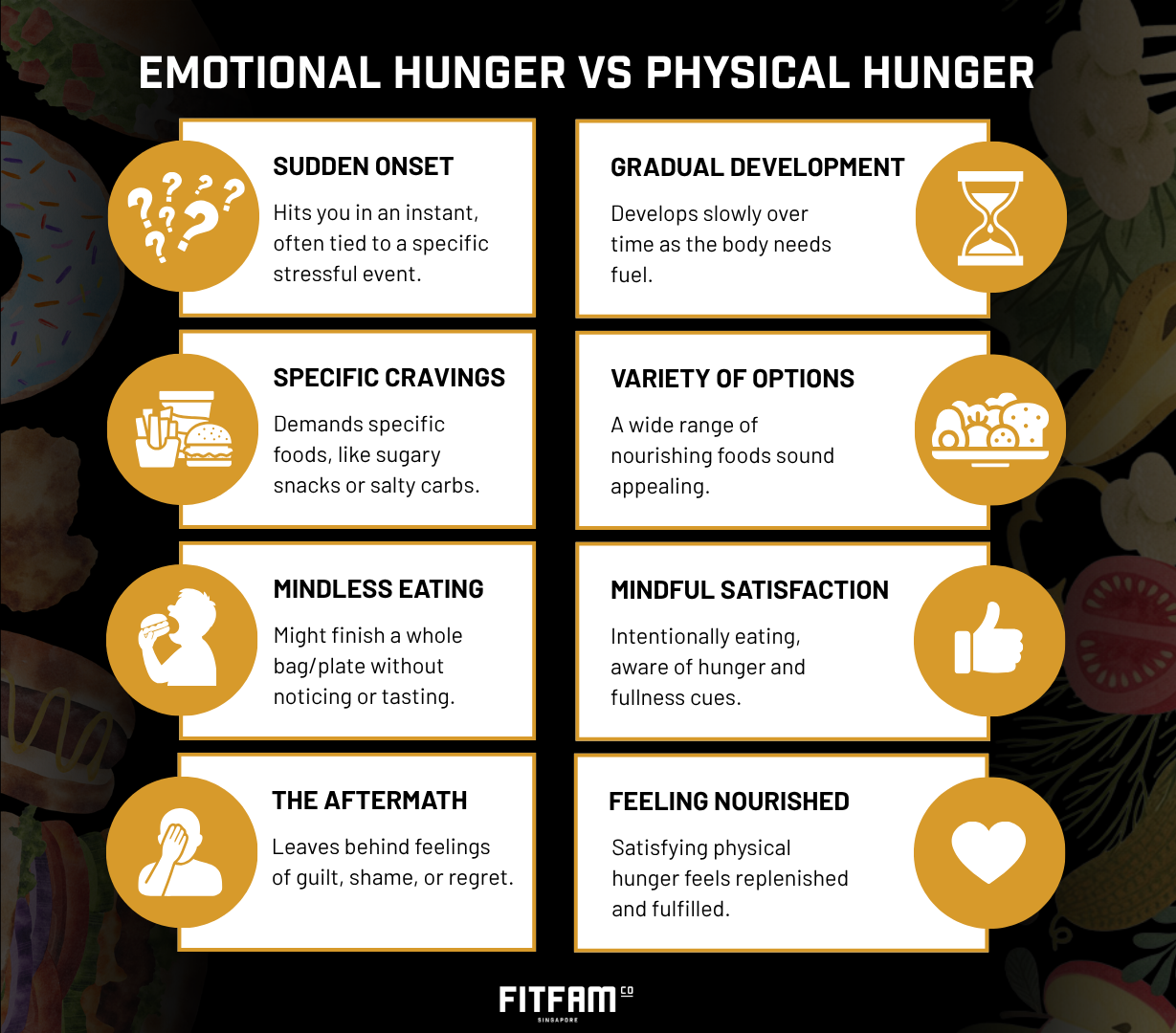
To break the cycle of stress eating, you have to recognize it. Emotional hunger can easily be mistaken for physical hunger, especially when you are completely disconnected from your body's signals due to a busy schedule. However, there are big differences between the two. Understanding the emotional hunger vs physical hunger difference is vital for your long-term mental wellness. Here is what to look out for:
1. Sudden onset
Emotional hunger hits you in an instant, often tied to a specific stressful event or a sudden spike in anxiety. It feels urgent and demands immediate satisfaction.
On the other hand, physical hunger develops gradually. Your stomach might softly rumble, and the sensation builds over hours. It does not demand instant gratification the second it appears.
2. Specific cravings
People eating under stress tend to gravitate toward specific cravings: sugary snacks or heavy, salty carbohydrates. Your brain is specifically seeking the dopamine hit that these exact foods provide. When physically hungry, your body just needs fuel, meaning a wide variety of foods, including healthy options like a grilled chicken salad or an apple, will sound appealing and satisfying.
3. Mindless eating
Have you ever sat down with a snack while watching a show or answering emails, only to look down and realize the entire container is empty? You might finish a whole bag of chips without even noticing or truly tasting them. This is the sign of emotional eating. Physical hunger, conversely, allows for conscious consumption. You are aware of the bites you are taking, and you notice when your stomach starts to feel comfortably full.
4. The aftermath
The feelings you experience after eating are incredibly different. It is common to experience feelings of regret, guilt, or shame following an episode of emotional eating. Whereas satisfying physical hunger leaves you feeling nourished, energized, and without any negative emotional baggage.
Recognizing these key differences is your most powerful tool in regaining control. Once you can identify what your body is asking for, whether it is actual physical nourishment or just emotional comfort, you are no longer operating on autopilot. However, awareness is only the first step; to truly break the habit, you need a proactive game plan. Let's explore exactly how you can put this knowledge into practice with a few actionable strategies!
Strategies to Manage Emotional Eating
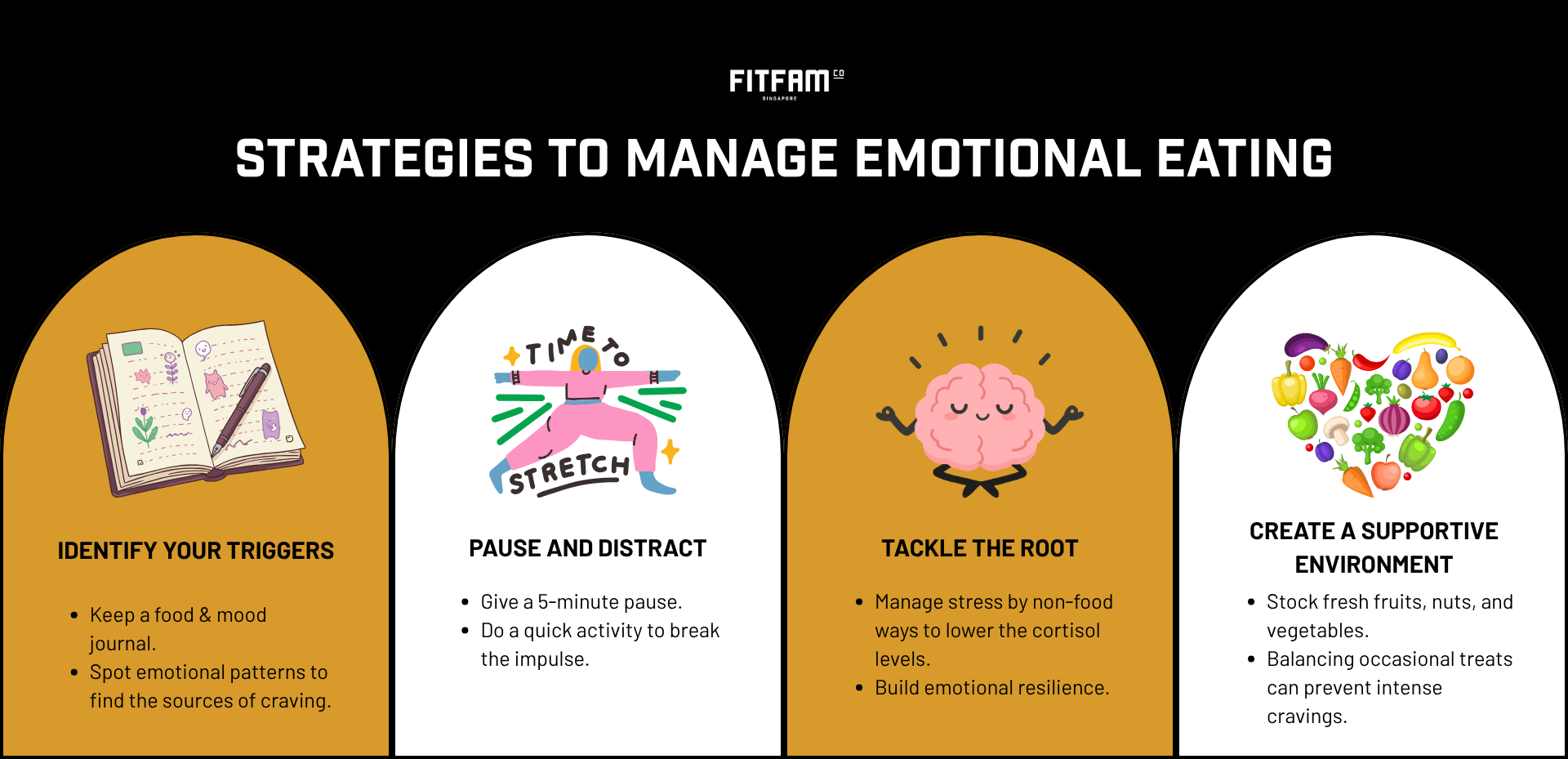
Breaking the mood-food cycle takes time, patience, and a heavy dose of self-compassion. Remember that you are unlearning a coping mechanism that your brain has relied on for a long time. If you want to know how to stop food cravings from stress, remember that awareness is only the first step. To regain control over emotional eating and support your psychological well-being, consider adopting these actionable strategies:
1. Identify Your Triggers
Overcoming emotional eating requires understanding its root causes. Start by keeping a dedicated food and mood journal. This doesn't have to be complicated; a simple note on your phone will work perfectly. Keep a precise record of what you eat, when you eat, and most importantly, how you are feeling at that exact moment. Were you bored? Anxious about anything? Step by step, you'll begin to spot the emotional patterns and triggers (afternoon fatigue, specific work-related stress, or social anxiety) that consistently precede your food cravings. Once these patterns are on paper, they lose their invisible power over you.
2. Pause and Distract
Emotional eating thrives on impulsivity. A sudden urge to eat might feel like an emergency, but it isn't. Give yourself a mandatory five-minute pause between the craving and the action. This window of time allows your rational brain to catch up with your emotional brain. The best distractions are quick, engaging activities that help you switch gears physically and mentally.
Try taking a brisk walk around the block, listening to your favorite upbeat music, or doing a quick stretching session. If you're stuck in the office and cannot leave, you can do Fitfamco's 5 stretches to do at your desk to release physical tension. It will help break the impulse and remind you that you do not actually need the food.
3. Tackle the Root Cause: Stress
Since stress is the primary biological driver of emotional eating, finding non-food ways to manage it is the most crucial step of all. You have to replace the coping mechanism with something healthier. Practices like deep breathing exercises, daily yoga, and mindfulness meditation can help lower your circulating cortisol levels and build long-term emotional resilience. When you actively lower your baseline stress, your body stops screaming for quick-energy sugar fixes.
4. Create a Supportive Environment
Willpower is a finite resource, especially at the end of a tiring workday. Do not rely on willpower alone; rely on your environment too. Stock up on healthier snacks and remove highly processed food and sugary comfort foods out of your house or workspace. If it isn't there, you can't eat it.
If you do feel the genuine urge to eat between meals, choose nutrient-dense whole foods like fresh fruit, almonds, walnuts, or crunchy vegetables. The right ingredients can actually support your mood and balance your blood sugar. To learn more about optimizing your diet for brain health, check out these 5 foods that boost mental wellbeing.
Also, you mustn't deprive yourself entirely. Strict diets often lead to binge eating. Enjoying an occasional, mindful treat as part of a balanced lifestyle can actually help prevent those intense, unmanageable cravings.
Disclaimer: The information in this article is for general wellness purposes only and should not be considered medical advice. Individual results may vary. If you have specific health concerns or conditions, please consult a healthcare professional before making dietary changes.
Conclusion
At its core, overcoming stress-driven eating begins with understanding how your body physically reacts to pressure. It requires distinguishing the urgent demands of emotional hunger from the gradual needs of physical hunger, intentionally using a 5-minute pause to reset your nervous system, and actively creating a supportive environment that champions your health. This is a journey of self-discovery, not a race for perfection.
There is no need to tackle this issue solo; if self-help methods aren't enough, a qualified specialist can provide a valuable roadmap. A mental health professional or a registered dietitian can help you untangle the complex relationship between your emotions and eating habits.
It is completely normal to turn to meals during overwhelming times, but this habit shouldn't govern your lifelong approach to nutrition. By understanding the powerful biological drives behind food cravings and by practicing mindful eating strategies for workplace stress, you can protect your mental wellness, boost your daily energy, and build healthier, more sustainable habits for the long haul.
Ready to stop eating your feelings and regain control? Connect with our expert nutritionist today for personalized, 1-on-1 guidance to help you build healthier, sustainable habits.
