The Practical NAPFA & IPPT Fueling Guide for Better Performance

You’ve put in the work — late evenings at the stadium after school or after a long day at work, clocking your runs and perfecting your push-ups and sit-ups. You know your training plan by heart. But when test day arrives, somehow your body doesn’t feel like it’s on your side.
Halfway through your second lap, your legs feel heavy and unresponsive. You want to push, but the “tank” feels empty. Or maybe you’re at the Standing Broad Jump station, and that usual “spring” just isn’t there. If you’ve ever felt sluggish or heavy despite all your hard work, the issue likely isn’t your fitness, it’s your fuel.
Many NAPFA & IPPT participants experience this: low energy on test day even after solid training. Most people don’t miss their targets because they’re unfit; they miss them because they run out of fuel before the final sprint – you can have the best engine in the world, but if you put in the wrong petrol or worse, no petrol at all, you won’t hit Gold or an A-grade. Research shows that exercising without adequate energy, especially carbohydrates, can reduce endurance and cause fatigue to set in earlier than expected.
That’s why knowing what to eat, and when to eat it, can make the difference between struggling through the test and performing closer to your true potential. Whether you’re a student aiming for that certificate or an NSman chasing the incentive, this guide is your game plan to fuel correctly and stay energised from the first rep to the finish line.
NAPFA & IPPT Fueling Timeline: What to Eat & When

Timing your nutrition is just as important as your training. Eat too much too close to the test and you might feel bloated during sit-ups. Eat too little and you may hit “the wall” during the 2.4 km run. To hit that Gold or A-grade, you need a plan that keeps your energy steady.
1. The Night Before: Carb-Loading for Stamina
Your dinner sets the stage for tomorrow’s performance. Choose “clean” complex carbohydrates like brown rice, sweet potatoes, or whole-meal pasta with lean protein like steamed chicken or fish. This helps fill your muscle glycogen stores, your primary energy source for high-intensity activities like running and jump stations.
2. 2 Hours Before: The “Safety Window”
This is your last major meal before test time. Go for something light and easy to digest, such as a small bowl of oats with fruit or a peanut butter sandwich. Avoid rich, spicy, or oily foods, which can slow digestion and lead to cramps or discomfort during intense activity.
3. 30 Minutes Before: The Instant Energy Spark
As test time approaches, simple carbohydrates are your best friend. A medium-sized banana or a slice of white toast with honey supplies quick glucose that your muscles can use right away for explosive stations and the start of your run.
You can read more about pre-workout snacks here, complete with 20 healthy snack ideas for you.
4. After the Test: The Recovery Phase
Once you cross the finish line, your body shifts into recovery mode. Within 30–60 minutes, refuel with a mix of protein and carbohydrates, a protein shake with fruit or a proper meal like fish soup with rice works well. This helps restore glycogen and supports muscle repair so you don’t feel wiped out for the rest of the day.
Disclaimer:
This article is intended for educational purposes only. Nutrition needs and responses can vary from person to person. If you have any existing health conditions, dietary restrictions, or specific medical concerns, it’s best to seek advice from a qualified healthcare professional before making changes to your diet.
Energy Boosters vs. Energy Drainers
Not all calories are created equal. When you are under the stadium lights, some foods act as high-grade petrol, while others act like "sludge" in your engine. To maximize your performance, you need to distinguish between foods that provide stable, long-lasting power and those that leave you feeling lethargic.
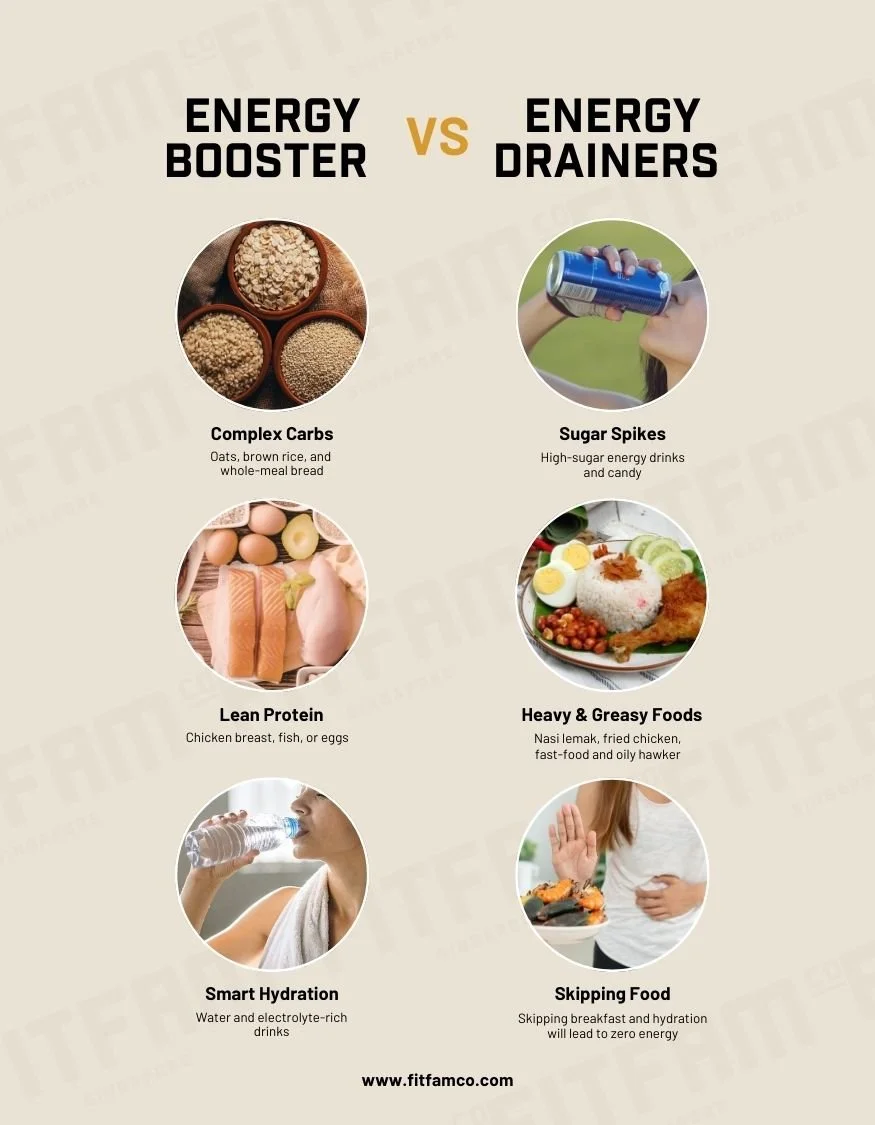
The Boosters:
These foods provide a steady release of glucose into your bloodstream, keeping your mood stable and your muscles "charged."
Complex Carbs: Oats, brown rice, and whole-meal bread give you the stamina for the 2.4km run.
Lean Proteins: Chicken breast, fish, or eggs provide the building blocks to keep your muscles from fatiguing too early. Read more here to find out why proteins matter to support your energy.
Smart Hydration: Water and electrolyte-rich drinks ensure your brain and muscles communicate fast.
The Drainers:
These might give you a 5-minute "high," but they will leave you feeling tired and moody just when you need to perform.
Sugar Spikes: High-sugar energy drinks or candy cause an insulin spike followed by a massive "sugar crash" halfway through your test.
Heavy, Greasy Foods: Foods like nasi lemak, fried chicken, fast-food breakfast items, or oily hawker dishes take longer to digest. While your body is busy trying to digest grease, it’s stealing blood flow away from your legs and lungs.
The "Empty Tank": Skipping breakfast due to nerves is the ultimate drainer. Without fuel, your body will experience a physical state where your energy hits zero and your brain tells you to quit.
Tip: Think of your food as an investment. Boosters pay you back in performance; Drainers are a debt you’ll have to pay mid-run.
Why Training Is Just as Important as Energy for NAPFA & IPPT

Here’s the reality: energy is the fuel, but your body is the machine. You can start the test day with a full tank, but if your movement mechanics aren’t efficient, that energy drains faster than it should. Even with enough fuel, inefficient running form or poorly controlled sit-ups can cause unnecessary fatigue long before the test ends.
That’s where proper training comes in. Performance in IPPT and NAPFA isn’t just about pushing harder, it’s about learning how to move smarter. Small improvements in running technique, pacing, and movement efficiency can help you conserve energy and use it where it matters most, especially during the final sprint or explosive stations.
At FITFAMCO, our NAPFA & IPPT Personal Training Programs focus on improving energy efficiency, not just effort. We work on movement mechanics, pacing strategies, and test-specific techniques, helping you jump further with less wasted effort and manage your run so you still have energy left at the finish line. The goal isn’t just to train harder, but to train smarter, so your preparation truly shows on test day.
conclusion
At the end of the day, your performance on test day is the sum of every choice you’ve made over the last few months—from the extra interval set you did at the track to the breakfast you chose on the morning of the test. Don’t let a lack of planning or a bad meal choice sabotage the hard work you’ve put in. By mastering your meal timing and fueling your body with the right energy sources, you aren't just "trying" to pass; you are setting yourself up to dominate.
However, remember that nutrition is only one piece of the puzzle. While the right fuel gives you the energy to move, expert coaching gives you the ability to move better. Our certified coaches design personalised training plans to suit your current fitness level and performance goals. Whether you’re a beginner or working towards advanced results, you’ll receive expert guidance, focused coaching, and a structured plan that helps you progress efficiently while minimising common mistakes and injury risks. For a more complete approach, our nutrition coaching services work alongside our coaches to support your training with effective nutrition strategies.