Why Strength Training Matters More as You Age

Have you noticed that you feel weaker even though your weight hasn’t changed?
Long hours of sitting leave your body stiff, and everyday movements—standing up from your chair, carrying groceries, climbing stairs—feel more tiring than they used to. Maybe you’ve also noticed it in others. Your parents take longer to stand up, hold the railing more carefully, or move with caution they didn’t show before. And while that might seem like something that happens later in life, the truth is: aging doesn’t start at retirement. It begins quietly, often in your 30s—accelerated by modern work and lifestyle habits.
Studies show that peak muscle mass and strength are reached by the early 30s. From that point on, adults naturally begin to lose muscle, often without realizing it. This age-related muscle loss is estimated at roughly 3–5% per decade in those without regular strength training.
That’s why it often goes unnoticed. Your weight hasn’t changed, your clothes still fit, and life just feels… a bit more tiring. You might chalk it up to stress, age, or being “busy.” But behind the scenes, your muscles are slowly doing less work than they used to. Strength fades quietly, movement feels heavier, and before you realize it, your body has been adjusting for years.
This is the silent muscle loss most adults don’t even know is happening.
The Silent Muscle Loss Most Adults Don’t Notice
Unlike injuries or illness, muscle loss rarely comes with pain or sudden warning signs. There’s no sharp signal telling you something is wrong. Instead, strength fades quietly while daily life continues as usual.
What makes this even harder to detect is how well the body adapts. As muscles weaken, we subconsciously adjust how we move. Using momentum to stand up, leaning on armrests, avoiding stairs, or choosing convenience over effort. These small compensations help us get through the day, but they also mask the underlying loss of strength. Over time, these adjustments become “normal,” making muscle decline feel like a natural part of life rather than something that can be addressed.
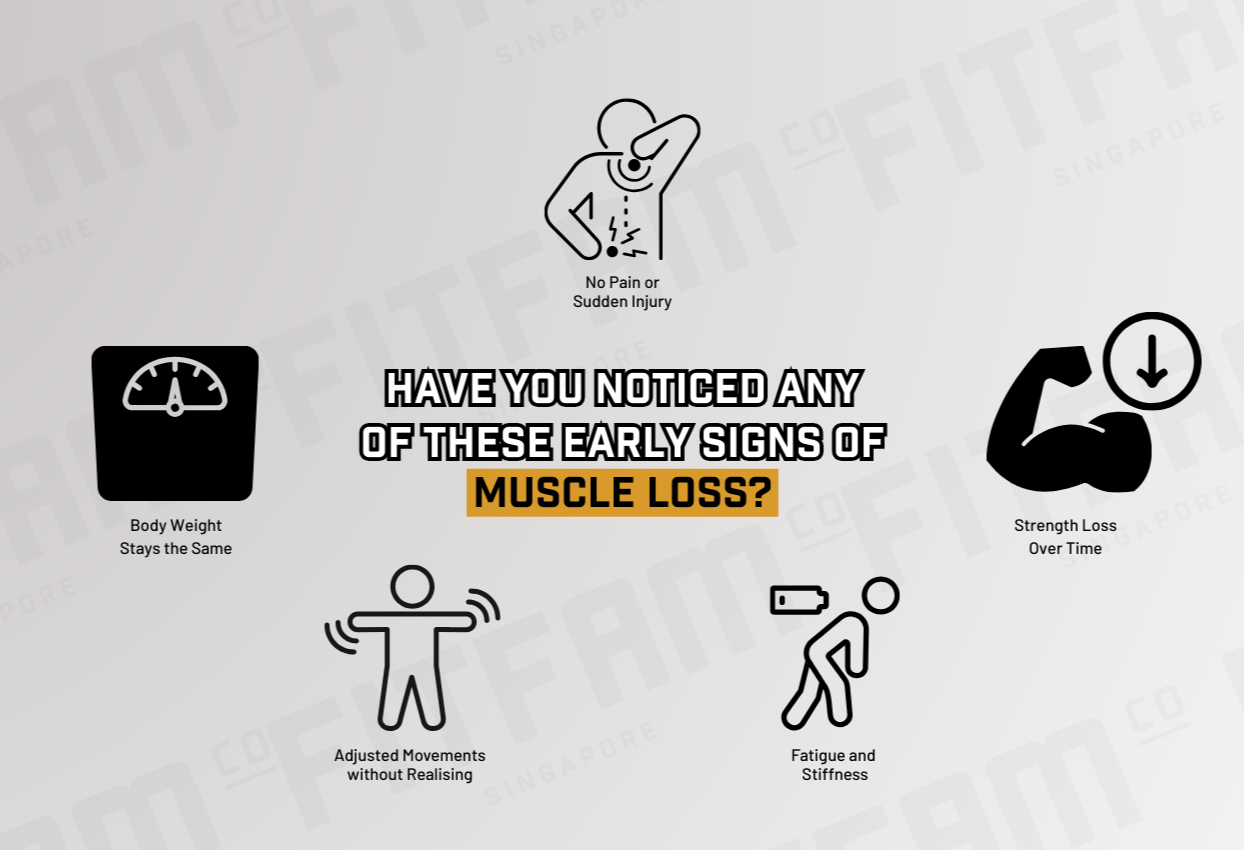
Many adults miss the early signs of muscle loss because:
There’s no pain or sudden injury to signal a problem
Body weight often stays the same, masking changes in muscle mass
Daily movements are subtly adjusted, not avoided entirely
Fatigue and stiffness are blamed on age, stress, or work
Strength loss happens gradually, over years rather than months
This quiet, gradual reduction in muscle mass and strength has a name: sarcopenia. Sarcopenia refers to age-related muscle loss that typically begins as early as the 30s or 40s and progresses slowly over time. Because it doesn’t cause immediate disruption, many adults don’t realise it’s happening until everyday movements.
By the time these changes are obvious, muscle strength may have been declining for years. And without intentional strength-focused training, that decline often continues unnoticed. This is why understanding sarcopenia early is so important.
Why Strength Training Becomes Essential With Age
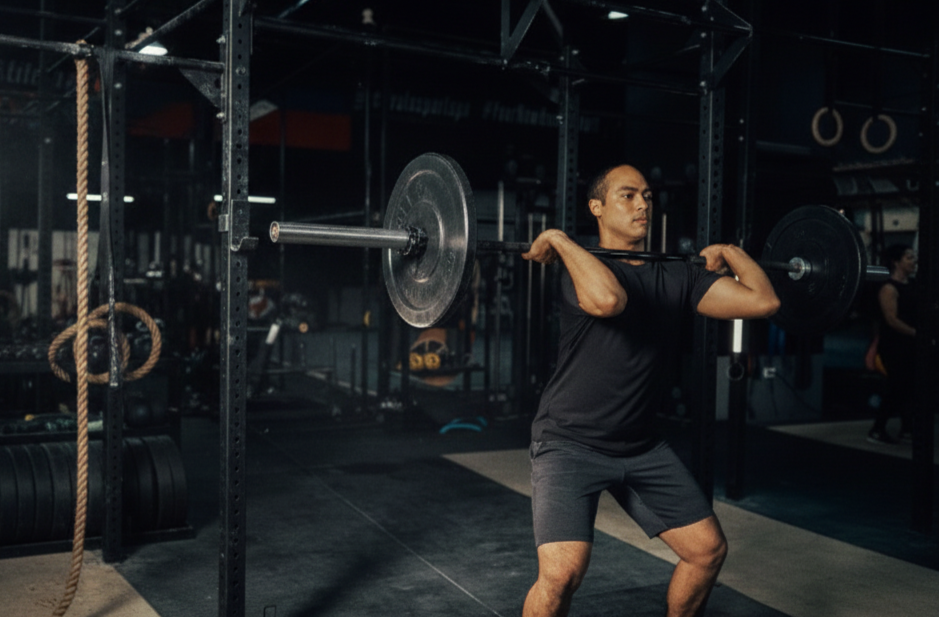
As we age, strength training shifts from being optional to essential. It’s no longer just about aesthetics or performance, it’s about preserving muscle, maintaining function, and staying capable in everyday life. Regular strength training helps slow age-related muscle loss, allowing the body to continue performing daily movements efficiently and safely.
How strength training supports healthy aging:
1. Preserves muscle mass and physical function
Strength training helps slow the natural decline in muscle mass and strength that begins in mid-adulthood. By maintaining muscle, the body can continue performing daily movements, such as standing, lifting, walking, and reaching.
2. Supports posture, joint health, and balance
Stronger muscles help stabilize joints, improve alignment, and reduce unnecessary strain on the body. This is especially important for adults who spend long hours sitting or experience stiffness over time. Better balance and coordination also lower the risk of falls and age-related injuries.
3. Maintains bone strength and structural support
Strength training places healthy stress on bones, helping to maintain bone density as we age. This is crucial for reducing the risk of osteoporosis and fractures, particularly in older adults. Strong muscles working alongside strong bones create a more resilient and supportive body structure.
4. Supports metabolic health and body composition
Strength training helps regulate metabolism by increasing lean muscle mass, which plays a role in energy use and blood sugar control. As we age, this becomes increasingly important for managing weight, supporting metabolic health, and reducing the risk of lifestyle-related conditions.
5. Supports heart health and brain function
Strength training contributes to cardiovascular health by improving circulation, supporting healthy blood pressure levels, and enhancing how the body uses oxygen. Regular resistance training has also been linked to better cognitive function, including memory, focus, and mental clarity, as it promotes blood flow to the brain and supports overall nervous system health. As we age, these benefits play an important role in maintaining both physical vitality and mental sharpness.
6. Improves quality of life and independence
Everyday activities such as carrying groceries, climbing stairs, getting up from the floor, or travelling independently become easier and less fatiguing. Strength allows individuals to stay active, confident, and independent, not just in later years, but throughout adulthood.
However, effective strength training must evolve as we age. What works in your 20s may not be suitable in your 30s, 50s, or beyond. Training should place greater emphasis on controlled movements, joint-friendly exercises, stability, and proper technique, while progressing at a pace that feels safe and sustainable.
This is especially important for older adults, where strength training should prioritise safety, stability, and confidence alongside strength gains. With proper supervision and structured programming, seniors can build strength safely and effectively, benefits we explore in more detail in our article on the top benefits of strength training for seniors.
Ultimately, strength training isn’t about pushing limits. It’s about protecting your ability to move well for years to come. Whether you’re building strength in your 30s or maintaining it later in life, the right training approach makes all the difference.
Conclusion
While muscle loss may begin earlier than many people realise, the more important takeaway is this: strength can be built, maintained, and improved at any age. Strength training is not just a response to aging, it’s a proactive strategy to support how your body moves, feels, and performs throughout life.
What matters most is how strength training is approached. Programs should evolve over time, placing greater emphasis on proper technique, controlled movements, stability, and recovery as the body changes. With the right structure and guidance, strength training remains safe, effective, and highly beneficial, whether you’re building a strong foundation in your 30s or maintaining functional strength later in life.
At FITFAMCO, our Strength Training programmes are designed with this long-term perspective in mind. Led by certified trainers and experienced strength training experts, our programmes are tailored to different age groups and abilities — from working adults to seniors — ensuring training is progressive, supervised, and aligned with each individual’s needs. We focus on building strength that supports real-life movement, confidence, and longevity.
Because strength isn’t just about lifting heavier weights, it’s about moving better, living stronger, and staying capable for years to come.