
How to Measure the ROI of Your Workplace Wellness Program

You launched a wellness program. Employees attended classes, joined wellness talks, and participation looked steady.
But eventually leadership asks a harder question: What impact is this actually having on the business?
This is where many HR and people managers get stuck, not because the program isn’t working, but because nobody explained what to measure, when to measure it, or what success is supposed to look like.
Wellness outcomes don’t always show up neatly in a spreadsheet. A fitness program may reduce stress. Lower stress can improve focus. Better focus may contribute to productivity and reduce burnout. The challenge is connecting those outcomes back to business value.
That’s why measuring employee wellbeing outcomes should not mean forcing everything into one financial number. Instead, the goal is to build a system that combines measurable outcomes, estimated business impact, and longer-term indicators of value.
Start With What You Can Measure Directly
The easiest mistake companies make is trying to measure everything at once. Start with data that already exists in your organisation.
1. Medical Leave (MC) Taken

Medical leave is one of the clearest wellness indicators because most organisations already track it. Compare average MC days per employee before and after launching employee wellness initiatives, and review trends quarterly rather than monthly to avoid overreacting to short-term changes.
Even small reductions can create measurable impact. A decrease of one MC day per employee can add up across salary costs, productivity, workload coverage, and management time.
What to track:
Average MC days per employee
Year-on-year comparison
Results against pre-program baseline
MC alone won’t prove the ROI of a wellness program, but it provides one of the strongest starting points.
2. Biometric Screenings
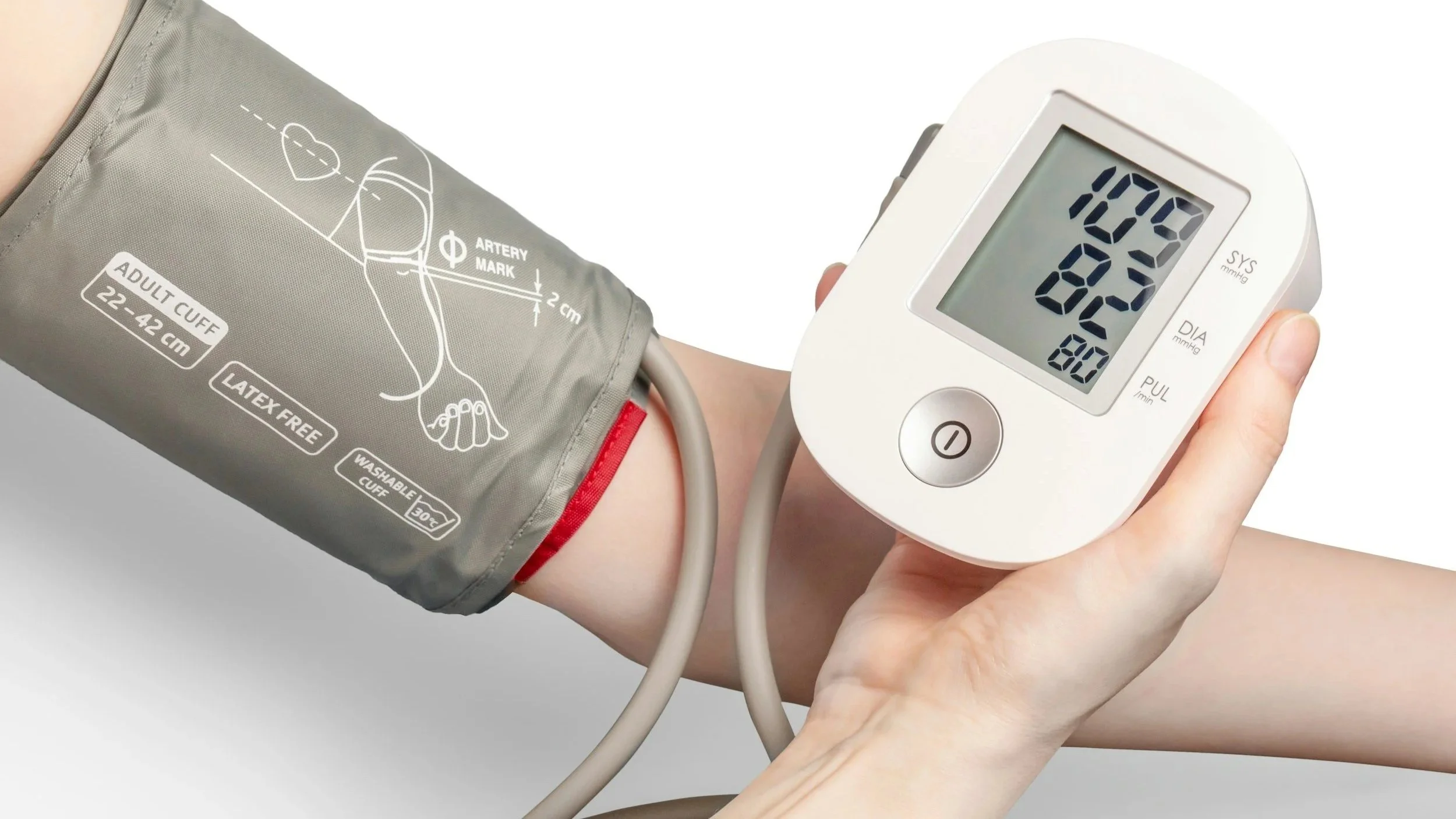
Instead of tracking subjective or sensitive metrics like body weight or body fat percentage, offer voluntary onsite biometric screenings. Tracking health markers such as blood pressure, cholesterol levels, and resting heart rate can provide objective aggregate data on whether your workforce is moving in a healthier direction.
What to track:
Aggregate trends in resting heart rate
Blood pressure averages
Cholesterol levels at program start, 6 months, and 12 months
One important caveat: Data privacy is non-negotiable. Individual results are private. Always use team-level or company-level trends for reporting, not individual metrics.
3. Participation Rate

Participation often gets overemphasised. A packed wellness event does not automatically mean success, and low attendance doesn’t always mean employees don’t care.
Participation alone does not prove return on investment, but it can indicate whether employees find the program relevant and worth returning to.
Instead of focusing only on attendance numbers, look deeper:
Unique participants
Repeat participation
Drop-off rates
Participation consistency across departments
If employees attend once and disappear, that usually tells you something about program design rather than employee motivation. If you're seeing these patterns but aren't sure what to measure next, our wellness plan templates for HR include practical examples you can adapt to build your own tracking approach.
4. Wellness Assessment Scores

One of the strongest ways to measure progress is to establish a baseline before programs begin. Structured wellbeing assessments allow organisations to compare employee wellbeing over time rather than relying on assumptions.
Areas commonly assessed include:
Physical wellbeing
Nutrition habits
Mental wellbeing
Lifestyle and social factors
FitFamCo’s Overall Wellbeing Initial Assessment is one example of a structured approach that helps organisations establish a baseline and track change across multiple dimensions. It draws on validated wellbeing instruments to improve consistency over time.
Pair this with anonymous mental health pulse surveys to monitor:
Stress levels
Burnout indicators
Psychological safety
Overall employee wellbeing
The important rule here is privacy. Employees should never feel like health data becomes performance data. Report trends at the team or company level, not the individual level.
[Enquire to run the Overall Wellbeing Assessment for your team →]
Beyond ROI: Measuring Value on Investment (VOI)
Not every outcome worth tracking will show up in a spreadsheet, and that's not a flaw in your measurement approach. It's just the nature of how wellness works. Some of the most important outcomes of a wellness program, such as building trust, reducing stigma, and creating a culture where employees want to participate, don't always have a direct financial value attached. This is often referred to as Value on Investment (VOI), a broader way of understanding what your program contributes beyond direct financial return.
Health Culture and Psychological Safety

A wellness program only works if employees feel comfortable engaging with it.
If employees feel guilty stepping away, or worry about being judged for engaging with mental health sessions, program quality alone won't drive sustained participation.
In many organisations, wellbeing challenges are less visible than leaders expect and often show up through stress, disengagement, or lower participation before they affect performance.
This is where psychological safety becomes important. Employees are more likely to seek support early when they feel safe discussing wellbeing without fear of judgment. Building this kind of workplace culture is often what determines whether a program produces sustained outcomes or remains surface-level.
Signs of a healthy wellness culture include:
Employees feel comfortable discussing wellbeing.
Participation comes from different groups across the organisation.
Anonymous feedback feels open and honest.
(If you're seeing signs of stress, disengagement, or low participation, our guide on Managing Workplace Anxiety explores what HR teams can watch for and how to create a safer environment before performance is affected.)
Team Energy and Connection

Wellness programs also create opportunities for employees to interact outside their normal work routines.
That may show up as:
Higher energy scores
Better collaboration
Stronger engagement
More positive feedback from managers
Team connection may not translate neatly into a financial figure, but over time it can influence morale, collaboration, and retention more than many organisations expect.
Once you know what matters, the next challenge is deciding when to measure it.
Build a Measurement System That Actually Works

Here's a simple structure that won't overwhelm you:
1. Before launch
Run your baseline wellbeing assessment, collect existing MC data, collect baseline biometric screening data (if applicable), and prepare a short anonymous wellbeing survey.
2. Quarterly
Track participation trends, review MC patterns, and run a short pulse check on energy and stress.
3. Every six months
Repeat wellbeing assessments, review biometric trends, and check employee retention and turnover trends.
4. Annually
Compare all metrics against your original baseline. Where possible, estimate the financial value of MC reduction, lower turnover, and productivity changes relative to program spend.
Present results honestly: what improved, what didn't, and why. A candid review builds more trust than a report that only shows wins.
What "Good ROI" Actually Looks Like

Set realistic expectations
In the first few months, most programs are creating awareness and building habits. Meaningful health outcomes often take longer to show up.
To help leadership evaluate progress realistically, break your expectations down into a timeline:
Months 1–3: Early participation patterns emerge and employee sentiment begins to shift. Focus on measuring engagement and awareness.
Months 6–12: Early health and business indicators may begin to emerge, depending on participation levels and program type.
Match the Expectation to the Program
Not every program will show the same results on the same timeline.
Short-Term ROI: Interventions like mental health support or targeted coaching often create faster business outcomes by directly addressing existing burnout.
Long-Term VOI: Broader initiatives like fitness, nutrition, and lifestyle habits generate value over a longer period through prevention and stronger employee engagement.
Focus on Your Own Baseline
Comparing results against your original baseline matters much more than comparing yourself to another organisation.
If early data isn't moving in the right direction, that's highly useful information. It tells you where to adjust the program design or improve communication, not that the investment is wasted.
The goal is to give leadership a meaningful answer to how to measure workplace wellness ROI rather than simply saying, "employees seemed to enjoy it."
Where to Start
If you're just beginning to measure the impact of your workplace wellness program, it can be tempting to track every possible metric. In reality, that's often what causes organizations to give up before they see meaningful results.
Instead, focus on collecting a small number of indicators consistently. Over time, these simple data points will provide a much clearer picture of your program's effectiveness than dozens of incomplete metrics.
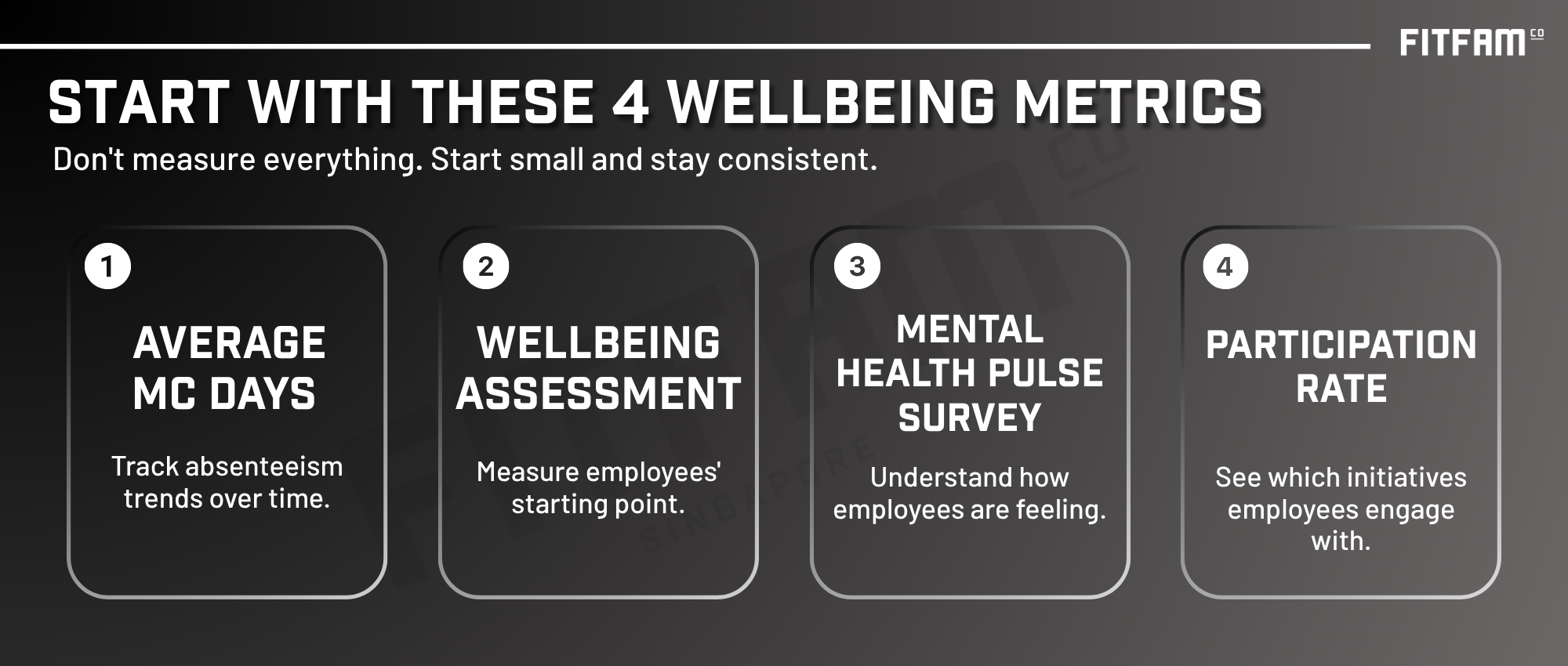
You don't need a sophisticated analytics system to begin. By tracking these four indicators consistently over the next 12 months, you'll have meaningful evidence to show leadership how your wellness initiatives are performing. More importantly, you'll be in a much stronger position when stakeholders ask, "Is our wellness program actually making a difference?"
Conclusion
Measuring wellness ROI isn't about proving your wellness program is perfect. It's about building enough evidence over time to show direction and to make smarter decisions about where to invest next.
Employee wellbeing and business performance are often more connected than reporting systems make visible. But the closer you get to measuring that connection, the easier it becomes to discuss wellness as a business decision rather than a standalone employee initiative.
Start small and measure consistently. Over time, you'll build a clearer picture of what your wellness investment is changing and give leadership something meaningful to act on.
Want to build a wellness program that leadership can actually measure? Get in touch with FITFAMCO to explore a structured approach to employee wellbeing with clear tracking and reporting.
